
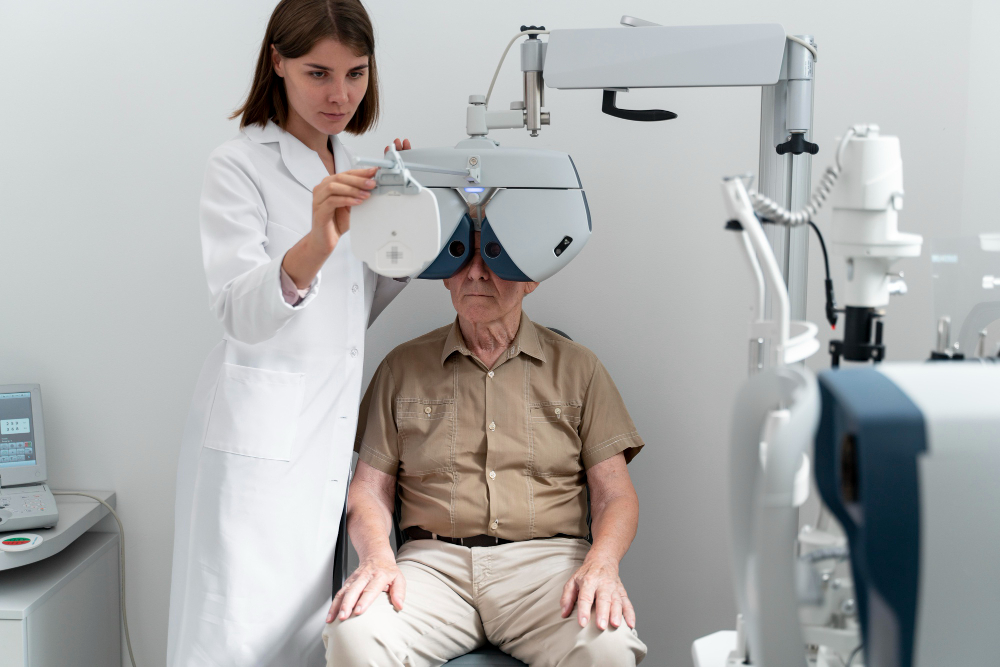
What Are Cataracts?
Cataracts are a common eye problem. They cause the lens inside your eye to become cloudy. Because of this, vision can become blurry or dim. Most often, cataracts develop slowly as people age. However, they can also form after an eye injury or certain health conditions. If left untreated, cataracts can make daily tasks hard. For example, reading or driving at night may become difficult.
How Is Cataract Surgery Performed?
Cataract surgery is a safe and quick procedure. During surgery, the cloudy lens is removed from your eye. Then, the doctor replaces it with a clear artificial lens. This new lens is called an intraocular lens, or IOL. Usually, the surgery takes less than 30 minutes. Most people go home the same day. After surgery, many people notice clearer vision within a few days.
Can Cataracts Return After Surgery?
Many people ask, “Can cataracts come back after surgery?” The simple answer is no. Once the cloudy lens is removed, a cataract cannot grow back on the artificial lens. However, some people notice cloudy vision after cataract surgery. This is sometimes called a “secondary cataract” or “cataract recurrence.” But it is not a true cataract. Instead, it is a different problem that can affect your vision.
What Is Posterior Capsule Opacification (PCO)?
After cataract surgery, the thin membrane that holds the new lens can become cloudy. Doctors call this problem posterior capsule opacification, or PCO. It is the most common reason for cloudy vision after cataract surgery. PCO is sometimes called a “secondary cataract,” but it is not a real cataract. Instead, it is a natural change that can happen months or even years after surgery. According to the American Academy of Ophthalmology, about 20% of people may develop PCO after cataract surgery.
Symptoms to Watch For After Surgery
It is important to know the signs of PCO or other vision problems after cataract surgery. Watch for these symptoms:
If you notice any of these symptoms, contact your eye doctor. Early treatment can help restore clear vision.
Treatment Options If Vision Becomes Cloudy Again
If you develop PCO, there is a simple solution. Your doctor may suggest a quick laser procedure called YAG laser capsulotomy. During this treatment, a laser makes a small opening in the cloudy membrane. As a result, light can pass through clearly again. The procedure is painless and takes only a few minutes. Most people notice better vision soon after the treatment. There is no need for stitches or a hospital stay.
Prevention and Eye Care Tips After Cataract Surgery
While you cannot always prevent PCO, you can care for your eyes after surgery. Here are some helpful tips:
Additionally, keeping your eyes healthy can help you enjoy clear vision for years to come.
Conclusion
To sum up, cataracts cannot come back after surgery. However, some people may develop cloudy vision due to posterior capsule opacification, also known as a secondary cataract. Fortunately, this problem is easy to treat with a quick laser procedure. If you notice cloudy vision after cataract surgery, consult Nethraa Eye Hospital for personalized advice.