Introduction
Many parents know that routine eye exams in children are important, but few realize just how much they matter. Early eye check-ups can spot vision problems before they affect learning or daily life. In fact, healthy eyes help children do well in school, play safely, and enjoy life. Because some vision issues have no obvious signs, regular exams are the best way to protect your child’s sight. Let’s explore why routine eye exams in children are so vital.
The Importance of Early Eye Exams
First, early eye exams can catch problems before they get worse. According to the American Optometric Association, many vision issues start young. However, children may not know their vision is blurry or different. When caught early, most eye problems can be treated easily. As a result, children can avoid struggles with reading, sports, or social life. Early exams also help find rare but serious eye diseases. Therefore, starting eye exams early gives your child the best chance for healthy vision.
Common Vision Problems in Children
Children can face several types of vision problems. Some of the most common include:
Because these issues can affect learning and safety, it is important to find them early. The CDC notes that about 1 in 4 school-aged children have a vision problem that needs care.
Signs Your Child May Need an Eye Exam
Sometimes, children show signs that they need an eye exam. For example, you might notice:
However, not all children show clear signs. Therefore, regular eye exams are important even if your child seems fine.
What Happens During a Routine Eye Exam
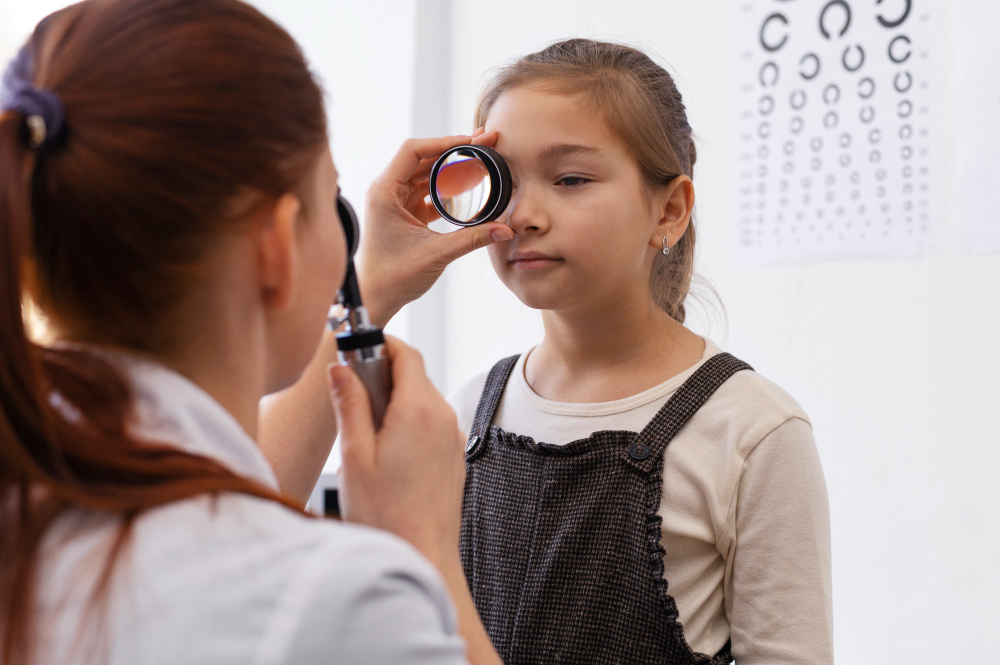
During a routine eye exam, the eye doctor checks your child’s vision and eye health. First, the doctor will ask about your child’s health and any vision concerns. Next, they will test how well your child sees letters or shapes. The doctor may also check how the eyes move and work together. Sometimes, special drops are used to look at the inside of the eye. Most exams are quick and painless. As a result, your child can feel comfortable and safe.
Benefits of Regular Eye Check-Ups for Children
Regular eye check-ups offer many benefits. For instance, they help:
Because vision is key to learning, regular exams can help your child do better in school and life.
How Often Should Children Have Eye Exams?
Experts like the American Academy of Ophthalmology suggest the following schedule:
However, if your child has vision problems or a family history of eye disease, more frequent exams may be needed.
Tips for Parents: Supporting Your Child’s Eye Health
There are simple ways to help protect your child’s eyes every day. For example:
By following these tips, you can help keep your child’s eyes healthy between exams.
Prevention and Early Intervention
Prevention is always better than cure. Routine eye exams in children help catch problems before they become serious. Early treatment can prevent vision loss and support healthy development. For example, treating a lazy eye early can often restore normal vision. Because some eye diseases run in families, early exams are even more important if you have a family history. Therefore, do not wait for symptoms to appear. Instead, make routine eye exams a regular part of your child’s health care.
Conclusion
In summary, routine eye exams in children are essential for healthy vision and learning. Early exams catch problems before they affect your child’s life. Regular check-ups, good habits, and early care can make a big difference. Consult a pediatric eye specialist at Nethraa eye hospital for personalized advice on your child’s vision health.